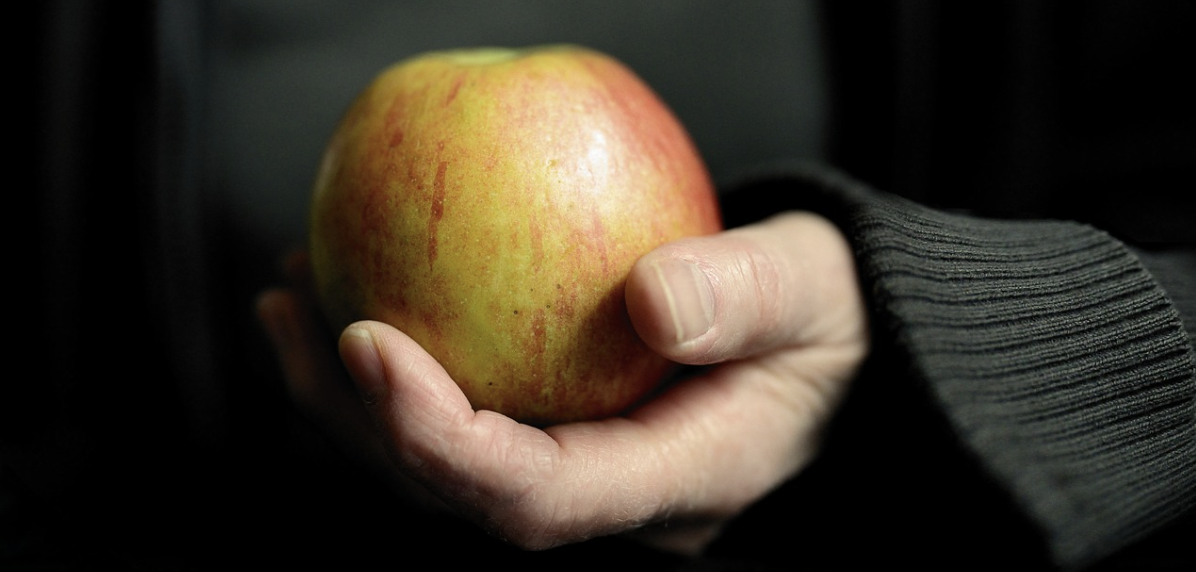
Now the serpent was more crafty than any other beast of the field that the LORD God had made. He said to the woman, “Did God actually say, ‘You shall not eat of any tree in the garden’?” — Genesis 3:1
Into the Word
One command had been given in the garden. Eat freely from every tree, except one (Genesis 2:16-17). That is what the serpent walks in to attack, and his opening move is not to deny it. It is a question, and a clumsy one on purpose. God never said they could not eat of any tree. He said they were free to eat of “every tree of the garden” with a single exception. The serpent overstates the restriction so the woman will correct him.
And she does. She knows the command. She repeats it back, and the warning is right: eat it and “you die” (Genesis 3:3). One phrase in her version is not in God’s. He had said nothing about touching the tree. His word to Adam was about eating (Genesis 2:17). It may have come from Adam’s retelling, a practical fence around the real line, the kind of thing anyone adds when passing on something that matters. The text does not say. What the text does say is that the command was given before she was formed (Genesis 2:18-22). She received it secondhand.
So the serpent learns something. She knows God’s command. That changes his strategy.
The Gap He Found
His next move goes past the rule and straight at the reason behind it:
For God knows that when you eat of it your eyes will be opened, and you will be like God, knowing good and evil. — Genesis 3:5
Read it slowly and notice what the serpent is doing. He is not arguing about fruit. He is supplying a motive for God, and the motive is rivalry. God knows. God is aware of what this tree would make of you, and that is exactly why He fenced it. The command is not care. It is a border drawn to keep you from becoming what He is.
That is the gap. She could recite what God said. She had nothing to say about why He said it. Into that silence the serpent poured his own reason, and once she accepted it, the fruit became the only trustworthy thing left in the garden.
Jesus names this as the devil’s native language. He is a murderer and a liar, and “when he lies, he speaks out of his own character” (John 8:44). The killing is done by the lie. Not a lie about the fruit. A lie about the Father.
The Pears That Were Not Even Good
Augustine tells a story in his Confessions about stealing pears from a neighbor’s tree as a teenager in Thagaste. By his own account the pears were neither beautiful nor good to eat. He was not hungry. He and his friends threw most of them to the pigs.
What haunted him decades later was that he could not locate a motive. Every other sin he examined had one underneath it, some good thing wrongly pursued. This one had nothing. He had wanted the taking, not the pears.
Set that next to Eve, whose fruit was “good for food” and “a delight to the eyes” (Genesis 3:6), and the two look like opposite cases. One reached for something lovely, the other for something worthless. But the appetite underneath is the same. The tree was never the point. What was wanted, in both gardens, was a life that answers to no one.
What She Should Have Said
There was an answer available to her. Not a clever one:
Because He loves me.
Say it again. Just because He loves me.
That sounds too simple to carry the weight of a temptation. I am aware of how it sounds. But arguments we cannot refute are rarely what break us. We are undone in the hour when God’s instruction stops feeling like care and starts feeling like rationing, and we have no settled answer for why He said what He said. Obedience that rests only on the memory of a command is thinner than we think. It holds until someone offers a better motive.
We keep learning the content. We are far less practiced at knowing the heart behind it.
Before We Move On
Most of us could pass a test on what God has said. The harder question is whether we could say why, in the hour it costs us something.
There may be no method for closing that gap. What is clear is where the doubt actually lands. When God’s goodness comes under suspicion, the trouble is rarely that we have forgotten His commands. It is that we can no longer see the One who gave them. We have lost sight of His face.
Before the serpent ever touched the fruit, he touched the reason.
Selah (סֶלָה)
Stay here for a moment. The oldest lie was never about a tree. It was about whether the One who gave the command could be trusted to love us.
Stay with that.
A Prayer
Lord, I can tell You what You have said. I am not sure I could tell You why.
I confess that I have kept Your commands out of memory more than out of trust, and memory does not hold when someone offers me a better reason.
I know how the voice comes. It never attacks Your Word. It explains Your motive. It tells me You are guarding something You will not share, that the line You drew is about You and not about me. And I have believed it more often than I want to say.
Let me keep learning what You have commanded, and take me further than that. Teach me who gave the command, and what love of Yours was in it.
You have never once fenced me off from anything out of fear of who I might become.
In the name of Jesus, who was offered every reason to doubt the Father’s love and went to the cross without taking one of them. Amen.
© 2026 Bible Portal. Free to share with attribution. Please keep the source and a link to Bible Portal intact. For other uses, contact us.
Original source: Why Temptation Starts With a Question — Bible Portal Insights
Want to read more? Visit Bible Portal Insights.