But the LORD God called to the man and said to him, ‘Where are you?’— Genesis 3:9
Into the Word
The serpent’s offer was not crude. It was almost reasonable. “You will not surely die” (Genesis 3:4), he said, and in one sense he was right. Adam lived to be nine hundred and thirty (Genesis 5:5). No lightning. No collapse in the garden grass. If you were measuring by heartbeat, God’s warning looked like an exaggeration and the serpent looked like the honest one.
But something had stopped. Later, in a story Jesus told, a father says of a son who walked away with his inheritance that he “was dead, and is alive again” (Luke 15:32). The boy was breathing the whole time. He was eating with pigs in a far country, perfectly alive by any medical definition, and his father called him dead. That is what death means when a relationship is severed. You keep walking around, and underneath, something has gone terribly wrong.
And notice who did the leaving. The father did not pack the bags. The son chose the road. I bring this up because a great deal of confusion gathers here. We sometimes talk about the fall as if God scripted it, as if Adam were an actor hitting his mark. That reading makes God strange: a physician who spreads the disease in order to sell the cure. The text gives us something sadder and more honest. God did not want this. The grief in Genesis 3 is His. Someone who had planned the disappearance would not go walking through the garden at evening, calling for the one who ran.
What Grew Underneath
The serpent’s real work was not the fruit. It was the sentence before it: “You will be like God” (Genesis 3:5). He planted a want. Then he let it grow.
Isaiah 14 preserves the same want in its purest form. The oracle addresses the king of Babylon, and a long tradition in the church has read behind that king an older fall. The Hebrew calls him hêlēl ben-šāḥar (הֵילֵל בֶּן־שָׁחַר), day star, son of dawn. Jerome’s Latin rendered it lucifer, and that is the name that entered English.
I will ascend to heaven; above the stars of God I will set my throne on high… I will make myself like the Most High. —Isaiah 14:13-14
I will ascend. I will set. I will sit. I will ascend. I will make myself. Five times the sentence begins in the same place, and that repetition is the whole indictment. Nothing violent is described. What brings the day star down is simply a hunger to be the one at the center, repeated until it hardens into a plan.
This is why pride is so hard to repent of. Our other sins have visible shapes. Pride is the root system, underground, feeding the parts we do see: the complaining, the comparing, the quiet verdicts we issue on people all day long. You can stand under a tree and name every branch and never once see what is holding it up.
Leaves First
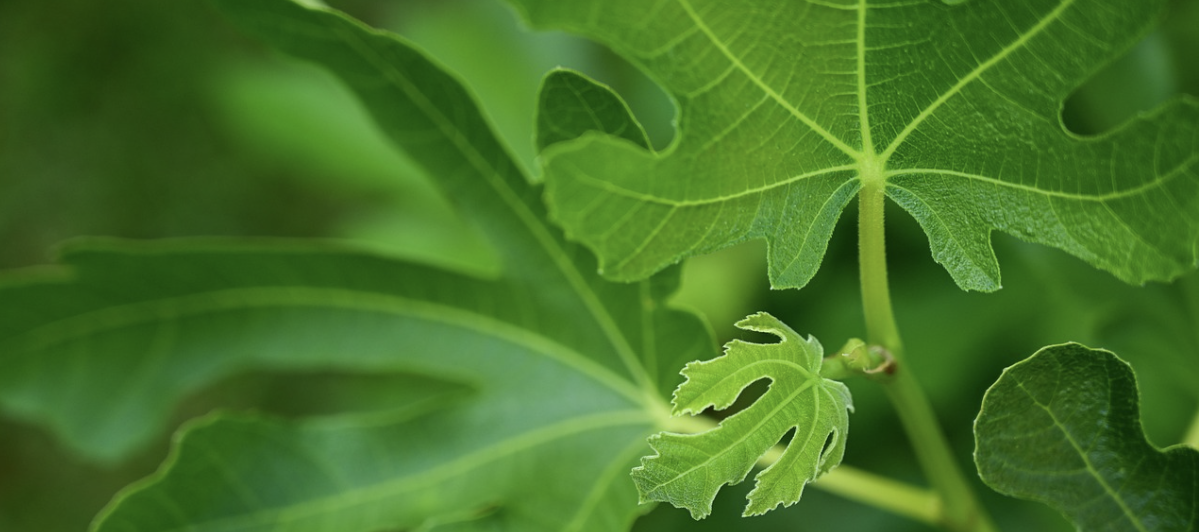
If the root is underground, we should expect our instincts about it to be off. Genesis gives us the evidence in a single verse. They ate, and the first thing they did was sew fig leaves together and cover themselves (Genesis 3:7). There is no confession in that verse, not even a word spoken toward God. Shame arrived before the conversation did, and it came with its own solution already in hand.
Then they hid among the trees, which is the most human sentence in the chapter. Leaves first, then distance. Shame never drives us toward repair. It drives us into the foliage, where we can at least be unseen.
And God came looking. He asked a question He already knew the answer to, which is what you do when you want someone to come out rather than be dragged out. “Where are you?” The first word spoken after the fall is not an accusation. It is a search.
That search did not end at the edge of the garden. Pride had reached upward, and what answered it went the other way. Jesus “did not count equality with God a thing to be grasped” (Philippians 2:6), and grasping is exactly what happened at the tree. He let go of what Adam seized, and He kept going down, past the towel and the basin, to a cross. The root we cannot reach was pulled up from underneath us by Someone willing to go that low.
Before We Move On
Sinners do not stop hiding. We only get better at it. The fig leaves grow more sophisticated with age: the calendar so full that no one can ask how we are and expect a real answer, the version of the story where we come out reasonable, the prayer request shaped carefully enough that it tells no one anything. We can sit in a room full of believers for years and be in the foliage the entire time.
We have never once seen this root clearly, and we are not the ones who will get it out. What we can do is stop running when we hear Him in the garden, and answer.
He is still walking through the garden at evening. He is still calling for the one who ran.
© 2026 Bible Portal. Free to share with attribution. Please keep the source and a link to Bible Portal intact. For other uses, contact us.
Original source: The Root We Cannot See — Bible Portal Insights
Want to read more? Visit Bible Portal Insights.